What Are Varicose Veins and Why Do They Develop?
Varicose veins are enlarged, twisted veins that develop when the valves inside the veins weaken or become damaged. These valves are responsible for keeping blood flowing in one direction — back toward the heart. When they fail, blood pools inside the vein, causing it to swell, stretch, and become visible under the skin.
They most commonly appear in the legs and feet because standing and walking increases the pressure in the veins of your lower body. Common contributing factors include:
– Prolonged standing or sitting
– Obesity or excess body weight
– Pregnancy
– A family history of vein problems
– Age-related valve weakening
While varicose veins may begin as a mild inconvenience, leaving them untreated creates the right conditions for serious complications to develop over time.
Can You Simply Leave Varicose Veins Untreated?
Many people wonder whether varicose veins will resolve on their own. The short answer is no — they do not. Varicose veins are a progressive condition. Without treatment or lifestyle management, they tend to worsen gradually, especially when the underlying causes are not addressed.
In the early stages, you may experience only mild discomfort or notice the appearance of visible veins. But over months and years, untreated varicose veins can progress to a point where they interfere with daily activities and require more complex medical intervention. Early treatment is always simpler, faster, and more effective than treating advanced complications.
Common Complications of Untreated Varicose Veins
1. Persistent Leg Swelling and Pain
One of the earliest and most frequent complications of untreated varicose veins is chronic swelling in the legs, ankles, and feet. This happens because poor circulation causes fluid to leak from the weakened veins into the surrounding tissues.
Over time, patients experience:
– Aching or throbbing pain, especially after standing
– A persistent feeling of heaviness or tightness in the legs
– Muscle cramps, particularly at night
– Swelling that worsens toward the end of the day
This level of ongoing discomfort makes it harder to walk, exercise, or even sleep comfortably — gradually reducing your overall quality of life.
2. Skin Changes and Discoloration
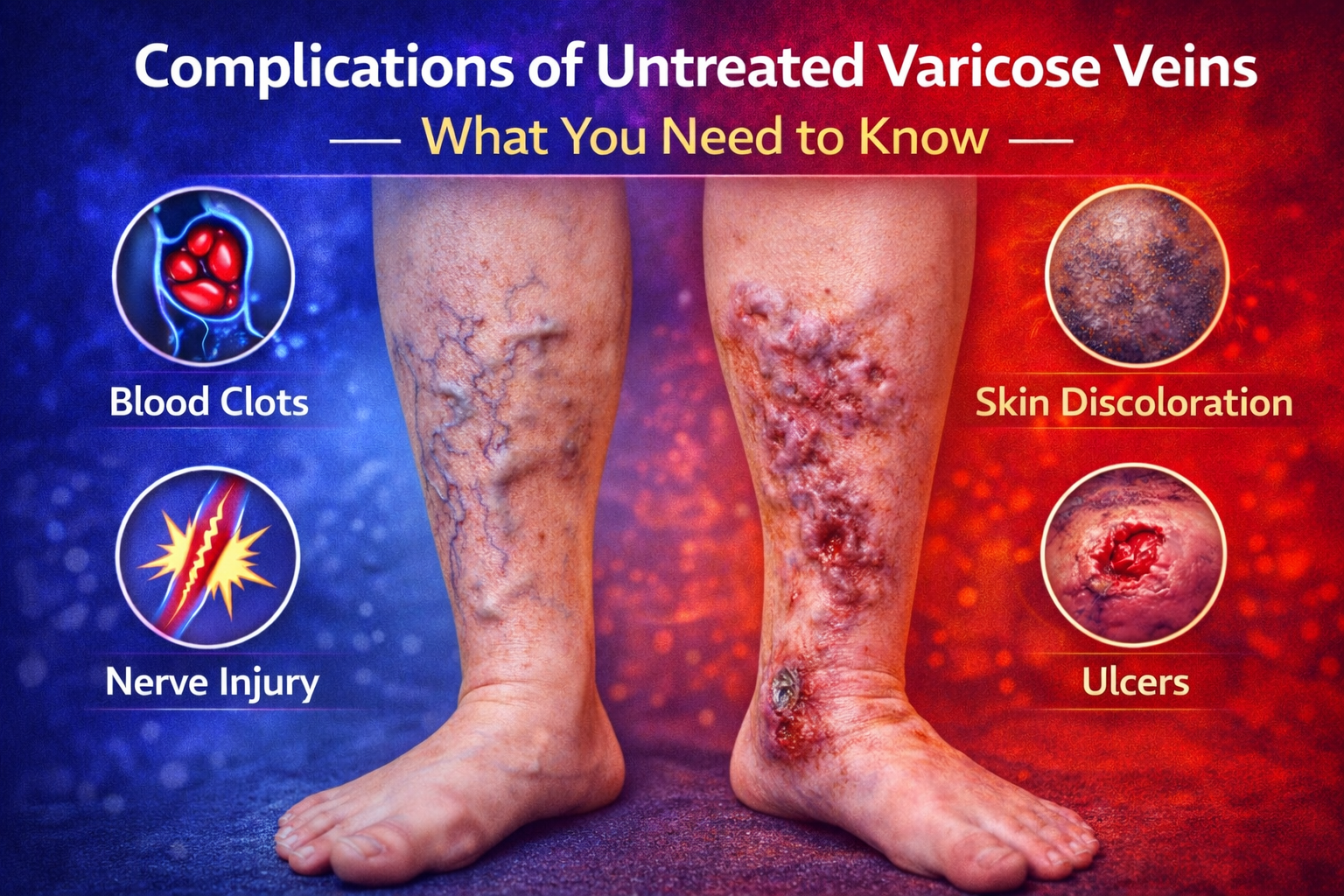
When varicose veins are ignored for an extended period, the skin around the affected veins begins to change. Increased pressure from poor blood flow forces red blood cells to leak out of the veins and into the surrounding tissue, causing a condition known as lipodermatosclerosis.
Signs of skin changes caused by untreated varicose veins include:
– Darkening or brownish discoloration of the skin around the ankles and lower legs
– Dry, itchy, or flaking skin (a condition called venous eczema)
– Thickening or hardening of the skin
– Inflammation and tenderness around the affected area
These skin changes are not simply cosmetic — they signal that the veins are under significant stress and that more serious complications may follow without treatment.
3. Venous Ulcers
Venous leg ulcers are one of the most severe complications of untreated varicose veins. They develop when the sustained pressure and poor circulation cause a breakdown in the skin, creating open, slow-healing wounds that typically form near the ankle.
Venous ulcers are painful, prone to infection, and notoriously difficult to heal without addressing the underlying vein problem. They can persist for months or even years and significantly impact a patient’s ability to move and perform daily tasks. Left untreated, venous ulcers can become infected and lead to serious complications.
4. Superficial Thrombophlebitis
Superficial thrombophlebitis is inflammation of a vein just beneath the skin, often accompanied by a blood clot. It is a direct complication of untreated varicose veins and presents as:
– A red, warm, tender cord along the course of a vein
– Localized swelling and pain
– Hardness in the affected area
While superficial thrombophlebitis is usually not life-threatening, it is painful, uncomfortable, and a warning sign that the venous condition has progressed and requires medical attention.
5. Deep Vein Thrombosis (DVT)
In more serious cases, untreated varicose veins can increase the risk of deep vein thrombosis — a blood clot that forms in the deeper veins of the leg. DVT is a potentially dangerous condition because the clot can break free and travel to the lungs, causing a pulmonary embolism, which can be life-threatening.
Warning signs of DVT include:
– Significant swelling in one leg
– Deep, cramping pain in the calf or thigh
– Skin that appears reddish or feels warm to the touch
– Visible surface veins
Anyone experiencing these symptoms should seek immediate medical attention.
6. Spontaneous Bleeding
Varicose veins that remain untreated for a long time may develop very close to the surface of the skin, where the overlying skin becomes thin and fragile. In some cases, even a minor knock or scratch can cause the vein to rupture and bleed. While such bleeding can often be controlled by applying pressure and elevating the leg, it can be startling and potentially serious in patients who take blood-thinning medications.
When Should You Seek Medical Help?
Not every varicose vein requires urgent treatment, but certain warning signs indicate that the condition has progressed and medical evaluation is necessary. Consult a vascular specialist if you experience:
– Persistent or worsening leg swelling that does not improve with rest
– Skin discoloration, thickening, or a rash around the ankles
– Open sores or wounds on the lower leg that are slow to heal
– Significant pain or heaviness that interferes with daily activities
– A sudden increase in the size or number of visible veins
– Signs of inflammation, warmth, or redness along a vein
Early consultation gives you the best chance of managing the condition simply and effectively, before it progresses to a stage requiring more intensive treatment.
Treatment Options to Prevent These Complications
The good news is that modern medicine offers a range of safe, effective, and minimally invasive treatments for varicose veins. The right approach depends on the severity of the condition, your overall health, and personal preferences.
Lifestyle Modifications — For mild cases, simple changes can reduce symptoms and slow progression. These include regular walking to improve circulation, elevating your legs when at rest, maintaining a healthy weight, and avoiding prolonged periods of standing or sitting.
Compression Therapy — Compression stockings provide graduated pressure that supports healthy blood flow in the legs. They can relieve discomfort and reduce swelling, though they do not treat the underlying vein problem.
Laser-Based Treatment — Endovenous laser therapy is one of the most advanced and commonly recommended treatments for varicose veins. A thin laser fiber is inserted into the affected vein, delivering laser energy that closes the vein permanently. It requires no surgical incision, involves minimal discomfort, and allows most patients to return to normal activities within a day or two.
Sclerotherapy — A specially formulated solution is injected into the affected vein, causing it to collapse and gradually fade. This approach is suitable for smaller varicose veins and spider veins.
Surgical Options — In severe cases where veins are significantly enlarged, surgical removal (phlebotomy) may be recommended. However, with advances in laser and minimally invasive techniques, open surgery is now rarely the first choice.
If you are experiencing symptoms and looking for expert care, exploring varicose vein treatment in Hyderabad at LaserQure can help you understand your options and begin the right treatment at the right time.
Conclusion
The complications of untreated varicose veins are real, progressive, and preventable. What starts as a cosmetic concern can develop into painful swelling, skin damage, venous ulcers, and an elevated risk of blood clots over time. The longer varicose veins go untreated, the more complex and difficult the situation becomes.
With modern minimally invasive treatments available today, there is no reason to delay. Early diagnosis means simpler treatment, faster recovery, and long-term protection for your vascular health.
Ignoring varicose veins can lead to serious complications over time. Early diagnosis and treatment can prevent long-term health issues. Consult an experienced vascular surgeon at LaserQure today — call us at +91 88862 41919 or visit www.laserqure.com.
Frequently Asked Questions
1. What are the main complications of untreated varicose veins?
Untreated varicose veins can cause persistent swelling, chronic pain, skin discoloration, venous ulcers, superficial thrombophlebitis, and in serious cases, deep vein thrombosis.
2. Can varicose veins go away on their own without treatment?
No. Varicose veins are a progressive condition. Without treatment or lifestyle changes, they typically worsen over time and increase the risk of serious complications.
3. How do I know when my varicose veins need medical attention?
Seek medical advice if you experience persistent leg swelling, skin changes, open sores near the ankle, increasing pain, or visible signs of inflammation along a vein.
4. Are varicose veins dangerous if left untreated for years?
Yes, Long-standing untreated varicose veins significantly increase the risk of venous ulcers, blood clots, and spontaneous bleeding, all of which require urgent medical care.
5. What is the most effective treatment for varicose veins today?
Endovenous laser therapy is currently one of the most effective and widely recommended treatments. It is minimally invasive, requires no surgical incision, and allows quick recovery.
6. Can varicose veins cause a blood clot?
Yes, Poor blood flow in varicose veins can increase the risk of clot formation, including superficial thrombophlebitis and, in serious cases, deep vein thrombosis.
7. What does a venous ulcer look like and is it serious?
A venous ulcer is an open wound, usually near the ankle, with irregular edges and slow-healing characteristics. It is a serious complication requiring prompt medical treatment.
8. Is walking good or bad for varicose veins?
Regular walking is beneficial as it activates the calf muscle pump and promotes healthy blood circulation. However, prolonged standing in one position should be avoided.
9. Can varicose veins be treated without surgery?
Yes, Most varicose veins today are treated with minimally invasive techniques such as endovenous laser therapy or sclerotherapy, eliminating the need for traditional open surgery.
10. How soon should I start treatment after noticing varicose veins?
The earlier the better. Early-stage varicose veins respond well to simple treatments. Delaying care allows the condition to worsen, increasing the risk of complications and the complexity of treatment required.