This simply works as a guide and helps you to connect with the doctor of your choice. Please confirm the doctor’s availability before leaving your premises.
If you are dealing with the sharp, glass-like pain of an anal fissure, one question is probably on your mind: how long will it take to heal without surgery? The good news is that most anal fissures heal on their own with simple, consistent care, and surgery is needed only in a small number of cases. Understanding the healing timeline helps you stay patient, follow the right steps, and know when it is time to seek expert help.
Many people search for Anal fissure treatment in Hyderabad hoping to avoid surgery, and in most cases that is entirely realistic. Acute fissures often respond very well to conservative care, while chronic fissures may need a little more time and medical support. In this blog, we explain the typical healing timelines, what speeds up recovery, the signs your fissure is healing, and when you should consult an anal fissure surgeon in Kukatpally for further evaluation.
What Is an Anal Fissure?
An anal fissure is a small tear or crack in the lining of the anus, the opening at the end of your rectum. It usually develops after trauma to the delicate anal lining, most commonly from passing hard or large stools.[1] Because this area is rich in nerves, even a tiny tear can cause intense pain during and after bowel movements, along with bright red bleeding and itching.
Anal fissures are very common and affect people of all ages. About half of all people who get a fissure experience it before the age of 40.[2] While the pain can be alarming, the condition is usually not dangerous, and with the right care most fissures heal well without any surgery.
Acute vs. Chronic Fissures: Why Timing Matters
The healing time depends heavily on whether your fissure is acute or chronic, so this distinction is important to understand. An acute fissure is a recent, shallow tear that has been present for less than six weeks.[3] These fissures usually heal on their own with simple self care measures. A chronic fissure is one that lasts longer than six to eight weeks or keeps coming back.[4] Chronic fissures are harder to heal because the internal anal sphincter muscle goes into spasm, which reduces blood flow to the tear and prevents it from closing. This creates a vicious cycle of pain, spasm, and reopening of the wound.[1] Roughly 40% of acute fissures may progress to become chronic if the underlying cause, such as constipation, is not addressed.[1] This is why early and consistent treatment matters so much.
How Long Does an Acute Anal Fissure Take to Heal?
Most acute anal fissures heal within a few days to a few weeks with conservative care. Many clinical sources note that acute fissures typically heal within four to six weeks with simple measures such as a high-fibre diet, warm sitz baths, and good hydration.[5] Some heal even faster, with a high percentage of acute fissures resolving within about three weeks when conservative care is started early.[6] Research also shows that the sooner you begin treatment, the better your chances of healing. In one study, healing rates were close to 100% in patients whose symptoms had lasted less than one month, but dropped sharply when symptoms had persisted for more than six months.[7] In short, the earlier you act, the faster you are likely to heal, which is why prompt anal fissure treatment in Kukatpally is so valuable.
How Long Does a Chronic Anal Fissure Take to Heal?
Chronic fissures take longer and often need medical treatment alongside lifestyle changes. When a fissure has lasted more than eight weeks, complete healing with medical treatment may take another six to twelve weeks.[8] Treatment usually focuses on relaxing the anal sphincter muscle so that blood flow improves and the tear can finally close. Medications such as nitroglycerin ointment or calcium channel blocker creams help reduce sphincter pressure and improve blood supply. Patients often notice reduced pain within one to two weeks of starting these, with complete healing over the following weeks if bowel movements stay soft and regular.[9] For fissures that do not respond to these measures, Botox injections or, in select cases, a minor procedure may be recommended by a specialist at the best anal fissure hospital in Hyderabad
What Helps an Anal Fissure Heal Faster Without Surgery?
Healing without surgery depends largely on consistent daily care. The following measures are the foundation of conservative treatment: A high-fibre diet keeps stools soft and easy to pass, reducing further tearing. Many clinicians recommend around 25 to 35 grams of fibre per day from fruits, vegetables, and whole grains.[9] Staying well hydrated supports softer stools and prevents constipation. Warm sitz baths, where you soak the anal area in warm water for about 10 to 15 minutes a few times a day, help relax the sphincter muscle and ease pain.[9] Equally important are good bowel habits. Avoid straining, respond promptly to the urge to pass stool, and do not sit on the toilet for long periods. Using a small footstool to raise your feet can create a more natural position and reduce strain. Topical medications prescribed by your doctor can relieve pain and improve healing. Together, these steps address both the tear and the underlying cause, giving your fissure the best chance to heal on its own.
Signs Your Anal Fissure Is Healing
It helps to know what improvement looks like so you can track your progress. The most common signs that an anal fissure is healing include a gradual reduction in pain, especially during and after bowel movements, and the bleeding stopping over time as the wound closes.[10] You may also notice less itching and irritation around the area. Keep in mind that healing is not always linear. A fissure that seems to be improving can reopen after a single hard bowel movement, which is why maintaining soft stools and good habits is essential throughout the entire healing period and beyond.
When Should You See a Doctor?
While most fissures heal with home care, certain signs mean it is time to consult an expert. You should see a specialist if your fissure has not improved after several weeks of consistent self-care, if the pain is severe, or if the fissure keeps coming back. Heavy or persistent bleeding, fever, or discharge should always prompt prompt medical attention, as these may point to another condition that needs evaluation.[2] An experienced anal fissure surgeon in Kukatpally can confirm the diagnosis, check the degree of sphincter spasm, and rule out other causes such as infection, fistula, or inflammatory bowel disease. Seeking timely care does not mean you will need surgery; in fact, expert guidance often helps you heal without it by ensuring you are using the right treatment for your specific case. If a procedure does become necessary, modern minimally invasive and laser options offer faster recovery and less discomfort than traditional surgery.
Parting Thoughts
So, how long does an anal fissure take to heal without surgery? For most acute fissures, the answer is a few weeks, usually within four to six weeks of consistent conservative care. Chronic fissures take longer, often six to twelve weeks with medical treatment, but many still heal without surgery when managed correctly and early. The key is to act promptly, keep your stools soft, follow good bowel habits, and stay consistent with care. If your fissure is stubborn, painful, or recurring, do not suffer in silence. Book an appointment with the expert team at Laserqure for trusted anal fissure treatment in Hyderabad and a personalised plan to help you heal comfortably and lastingly.
Frequently Asked Questions (FAQs)
Can an anal fissure heal completely without surgery? Yes. Most anal fissures, especially acute ones, heal completely with conservative care such as a high-fibre diet, hydration, warm sitz baths, and topical medications. Surgery is needed only in a small number of chronic or stubborn cases.
How long does a fissure take to heal with home care? Acute fissures usually heal within four to six weeks, and sometimes faster. Starting treatment early gives the best chance of quick healing.
Why is my anal fissure not healing? Common reasons include ongoing constipation and straining, spasm of the anal sphincter that reduces blood flow, repeated trauma from hard stools, or an underlying condition. A specialist can identify the cause and adjust your treatment.
What is the fastest way to heal an anal fissure naturally? Keep stools soft with a high fibre diet and plenty of water, take warm sitz baths a few times a day, avoid straining, and use any creams your doctor prescribes. Consistency is the most important factor.
When does a fissure become chronic? A fissure is considered chronic when it lasts longer than six to eight weeks or keeps recurring. Chronic fissures often need medical treatment in addition to lifestyle changes.
Which is the best hospital for anal fissure treatment in Hyderabad? Look for a clinic with experienced proctologists, a full range of treatment options from conservative care to advanced laser procedures, and strong post-treatment support. Laserqure in Kukatpally offers expert, minimally invasive anal fissure care in Hyderabad
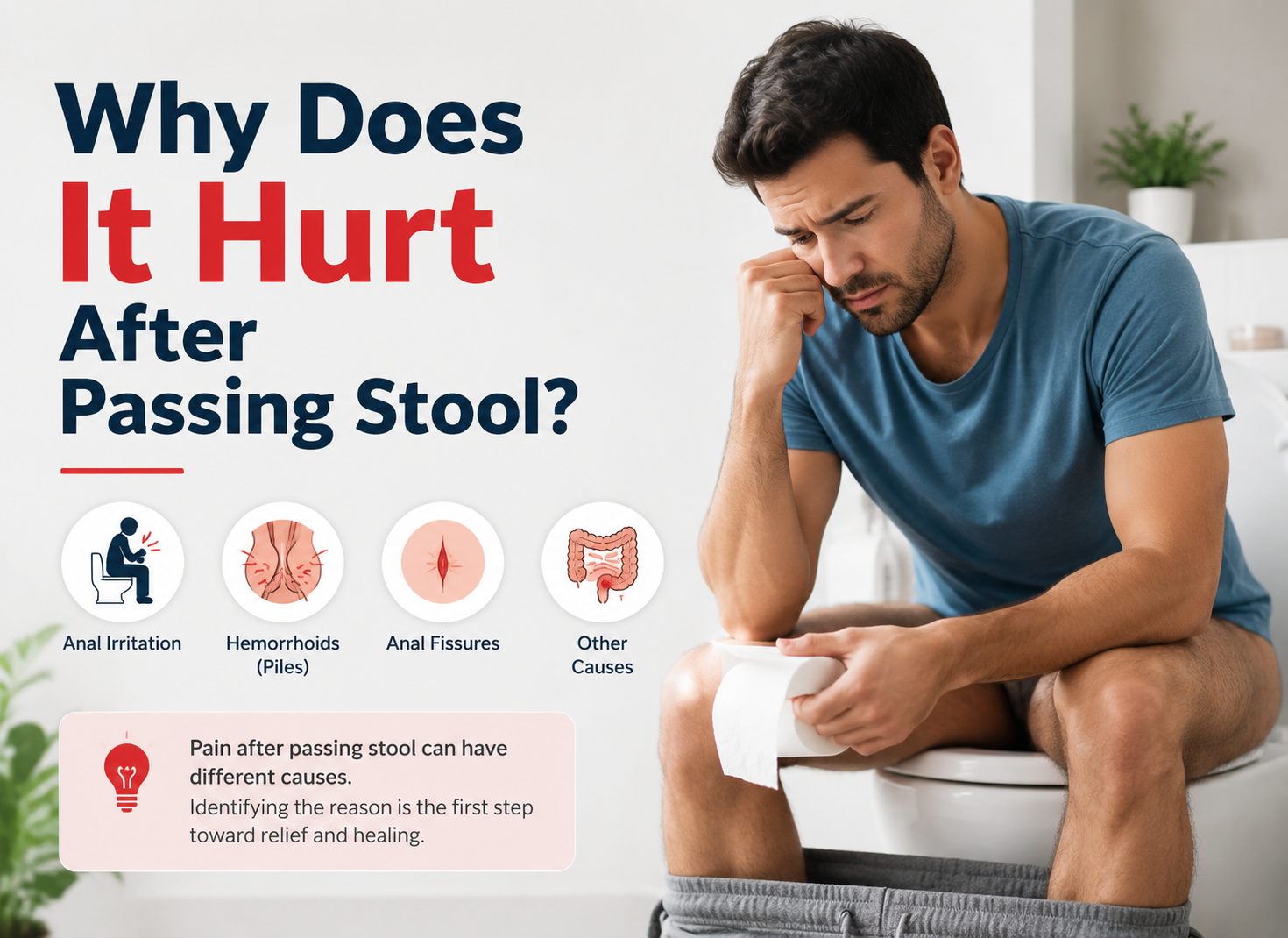
If you wince every time you visit the toilet — or dread going altogether — you are not alone. Pain after passing stool is one of the most common yet under-reported health complaints in India. Many people silently suffer for months, assuming it will go away on its own. Sometimes it does. Often, it doesn’t.
The most frequent cause of this sharp, burning discomfort is a condition called ananal fissure — a small tear in the lining of the anal canal. While it sounds minor, it can significantly affect your daily quality of life.
This guide explains what anal fissures are, why they cause pain, what makes them worse, and what you can do about them.
An anal fissure is a small cut or tear in the thin, moist tissue (mucosa) that lines the anal canal. Think of it like a paper cut — except in one of the most sensitive parts of your body.
Because the anal canal has a dense network of nerve endings, even a tiny tear can causedisproportionately intense pain, especially during and after a bowel movement.
Anal fissures can affect people of any age — including infants and young adults — and are equally common in men and women.
The pain pattern of an anal fissure is quite distinctive and follows a predictable sequence:
During the bowel movement — you feel a sharp, tearing or cutting sensation as stool passes over the fissure.
Immediately after — the pain may intensify for a few minutes.
30 minutes to 2 hours after — a prolonged burning or throbbing pain sets in. This is caused by spasm of the internal anal sphincter muscle, which tightens reflexively in response to the tear.
This sphincter spasm is actually the main reason anal fissures are so painful and why they take a long time to heal — the spasm reduces blood supply to the area, slowing natural tissue repair.
The primary cause is trauma to the anal lining, usually from:
1. Hard or Large Stools (Constipation) The most common trigger. Straining to pass a large, dry stool creates excessive pressure on the anal canal wall, causing a tear.
2. Chronic Diarrhoea Frequent, loose stools repeatedly irritate and inflame the delicate anal tissue, eventually breaking it down.
3. Childbirth Women who have given birth vaginally are at significantly higher risk. The pressure and stretching during delivery can cause fissures.
4. Anal Intercourse Friction and trauma can cause tears in the anal lining.
5. Low-Fibre Diet A diet lacking in fibre leads to harder, bulkier stools — a leading risk factor for both constipation and fissures.
6. Reduced Blood Flow Older adults may develop fissures due to reduced circulation to the anorectal area.
7. Inflammatory Bowel Disease (IBD) Conditions like Crohn’s disease can cause chronic anal fissures as part of their wider gut inflammation.
Acute vs. Chronic Anal Fissure — Know the Difference
Feature
Acute Fissure
Chronic Fissure
Duration
Less than 6 weeks
More than 6–8 weeks
Appearance
Fresh, clean tear
Fibrosed edges, sentinel pile
Likely Cause
Single trauma event
Repeated injury or poor healing
Self-healing
Often possible
Rarely heals without treatment
Treatment
Diet + topical creams
Medical or laser intervention
An acute fissure can become chronic if left untreated. Chronic fissures develop hardened, thickened edges and often come with a sentinel skin tag at the lower end — a sign that the body has been trying (and failing) to heal.
Acute fissures — yes, sometimes. With adequate hydration, a high-fibre diet, sitz baths, and stool softeners, many fresh fissures resolve within a few weeks.
Chronic fissures — rarely without medical intervention. Once the tissue has become fibrotic and the sphincter spasm is persistent, topical treatments and diet changes alone are usually insufficient.
Home Remedies That Can Help (For Mild Cases)
For early-stage or acute fissures, the following can provide relief and support healing:
Increase dietary fibre — 25–35g per day through fruits, vegetables, whole grains, and lentils
Drink 2.5–3 litres of water daily to keep stools soft
Warm sitz baths for 15–20 minutes, 2–3 times a day — reduces sphincter spasm and promotes blood flow
Avoid straining — never hold your breath or push hard during a bowel movement
Topical anaesthetic creams — can provide temporary pain relief (consult a doctor before use)
Stool softeners — help ease passage without straining
Conservative Treatment Fibre supplements, stool softeners, sitz baths, and topical creams (GTN, diltiazem, or lignocaine-based) are the first line for acute fissures.
Botox Injections Botulinum toxin injected into the internal anal sphincter reduces muscle spasm, temporarily allowing the fissure to heal. It is effective but may need to be repeated.
Laser Treatment (LIS — Laser Internal Sphincterotomy) For chronic, non-healing fissures, laser-assisted internal sphincterotomy is a minimally invasive option. The procedure:
Takes 20–30 minutes under local or short general anaesthesia
Involves a precise laser incision to release the sphincter spasm
Requires no hospital overnight stay — same-day discharge in most cases
Has a low recurrence rate compared to open surgery
Is covered under cashless insurance with 35+ insurers
At LaserQure, laser treatment for anal fissure is performed by Dr. Ram Bhupal Rao, a Plastic & Laser Surgeon with extensive experience in laser proctology at Anupama Hospitals, Kukatpally, Hyderabad.
No. Piles are swollen blood vessels inside or around the rectum. An anal fissure is a tear in the anal lining. They can coexist but are different conditions requiring different treatments.
The procedure is performed under anaesthesia, so there is no pain during the surgery. Post-procedure discomfort is mild and manageable with medication.
Yes — at LaserQure, anal fissure laser treatment is covered under cashless insurance with over 35 insurance providers, including major government and private schemes.
In most cases, yes. Laser fissure treatment at LaserQure is typically a day-care procedure with same-day discharge.
Q7. What foods should I avoid if I have an anal fissure? Avoid spicy foods, refined flour (maida), red meat, alcohol, and low-fibre processed foods. Focus on fruits, vegetables, oats, and adequate water intake.
LaserQure at Anupama Hospitals, Kukatpally, offers laser treatment for anal fissures performed by Dr. Ram Bhupal Rao. The procedure is minimally invasive, covered under cashless insurance with 35+ providers, and typically involves same-day discharge.
Conclusion
Pain after passing stoolis not something you have to accept as normal or simply endure. In most cases, it signals an anal fissure — a treatable condition. Early diagnosis and appropriate management can resolve it quickly, while delaying care can turn a simple fissure into a chronic, recurring problem.
If you’ve been experiencing these symptoms for more than a few weeks, a consultation with a laser proctology specialist can help identify the right course of treatment and get you back to comfortable, pain-free living.
Pregnancy can cause anal fissures due to increased pressure on the rectal area, hormonal changes, and constipation, which are common during pregnancy.
As the growing uterus presses on the digestive tract, bowel movements can become strained, leading to tiny tears in the anal lining.
Hormonal shifts also slow digestion, making stools harder to pass.
Additionally, childbirth, especially vaginal delivery, can further contribute to anal fissures due to excessive straining.
To prevent discomfort, pregnant women should stay hydrated, consume fiber-rich foods, and avoid prolonged straining.
Seeking medical advice can help manage symptoms and promote healing effectively.
Pregnancy is a time of significant change in a woman’s body, and while many changes are natural, some can lead to uncomfortable conditions like anal fissures.
Here’s why pregnancy might contribute to anal fissures and how LaserQure can offer effective solutions.
6 Pregnancy Causes You Must Know That Cause Anal Fissures
1. Increased Hormonal Levels
Why: Pregnancy causes a surge in hormones such as progesterone, which can relax muscles, including those in the anal region. This relaxation can affect the anal sphincter, making it more vulnerable to tears.
How: The relaxed muscle tone can contribute to the development of fissures, especially if there is additional straining during bowel movements.
Laser treatments at Laserqure can help by providing precise and minimally invasive options to heal fissures effectively. Laser therapy reduces inflammation and promotes healing, helping to alleviate discomfort.
2. Constipation
Why: The growing uterus puts pressure on the intestines, slowing stool movement and leading to constipation, a common issue during pregnancy.
How: Hard, dry stools and straining during bowel movements can stretch and tear the anal lining, resulting in fissures.
While laser therapy focuses on advanced treatments for fissures, managing constipation through dietary changes and hydration is crucial. For severe cases, laser therapy offers targeted treatments to heal existing fissures and restore comfort.
Why: The expanding uterus exerts additional pressure on the pelvic area, including the anal canal, which can contribute to fissures.
How: Increased abdominal pressure can exacerbate issues within the anal canal, especially when combined with constipation or straining.
Laserqure provides innovative treatments to address fissures effectively. Our laser technology targets the affected area with precision, promoting faster healing and reducing pain.
4. Changes in Blood Flow During Pregnancy
Why: Pregnancy increases blood volume and alters blood flow, which can affect the anal veins and surrounding tissues, leading to fissures.
How: Altered blood flow can make the anal area more susceptible to trauma and fissuring.
At Laserqure, we utilize laser treatments to improve blood flow to the affected area, aiding in the healing process and reducing the risk of complications.
5. Straining During Labor and Delivery
Why: Labor and delivery place intense pressure on the pelvic and anal regions, which can cause trauma and result in fissures.
How: The physical stress during childbirth can lead to new or exacerbated fissures.
Postpartum care at Laserqure includes advanced laser treatments to address and heal fissures effectively, providing relief and supporting recovery.
How: These changes can prolong discomfort if not properly managed.
LaserQure offers comprehensive care for postpartum anal fissures, including state-of-the-art laser therapy to promote healing and alleviate pain.
Prevention and Management
To prevent or manage anal fissures during pregnancy:
Maintain a high-fiber diet: Eat fruits, vegetables, and whole grains to avoid constipation.
Stay Hydrated: Drink plenty of water to keep stools soft.
Exercise Regularly: Gentle exercise can aid bowel movements.
Avoid Straining: Address bowel urges promptly.
Seek Medical Advice: Consult your healthcare provider for personalized care.
How LaserQure Can Help?
If you are experiencing anal fissures or other related issues, laser therapy provides effective and minimally invasive treatments to help you recover comfortably. Our expert team is dedicated to offering advanced solutions tailored to your needs.
For more information or to schedule a consultation, contact LaserQure:
By understanding the factors contributing to anal fissures and exploring advanced treatment options at Laserqure, you can find relief and support during and after pregnancy.