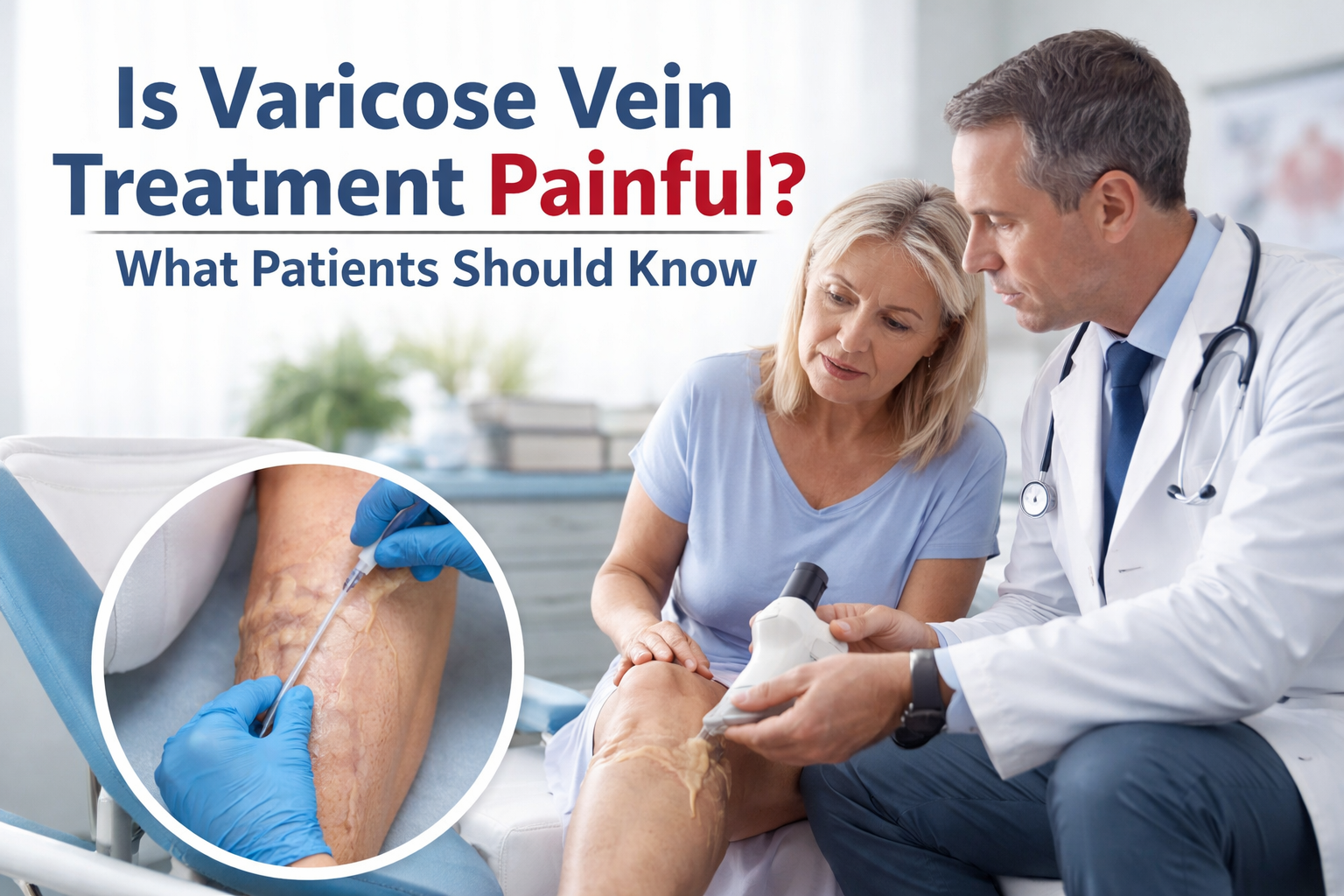
Varicose veins affect millions of people worldwide, especially those who spend long hours on their feet or sitting at a desk. If you’re considering treatment, you’re probably asking the most common question we hear at LaserQure: Is varicose vein treatment painful?
The fear of pain often causes patients to delay getting help — sometimes for years. The good news? Modern varicose vein treatment has come a long way. Most procedures today are minimally invasive, quick, and far more comfortable than patients expect.
In this guide, we’ll walk you through pain levels across different treatment options, what recovery really feels like, and how to make the process as smooth as possible.
Understanding Varicose Veins and Why Treatment Matters
Varicose veins develop when the tiny valves inside your veins weaken, causing blood to pool and the veins to bulge, twist, and become visible under the skin. They typically appear on the legs and can cause:
- Aching or throbbing pain
- Heaviness and fatigue in the legs
- Swelling around the ankles
- Itching or burning sensations
- Visible bulging or twisted veins
Beyond the cosmetic concern, untreated varicose veins can lead to skin ulcers, bleeding, and blood clots. That’s why early treatment is recommended — not just for appearance, but for long-term vascular health.
Is Varicose Vein Treatment Painful? The Honest Answer
Here’s the short answer: most modern varicose vein treatments cause little to no pain.
Minimally invasive procedures performed under local anesthesia have largely replaced traditional open surgery. During the procedure, the treated area is fully numbed, so patients typically feel only:
- A slight pinch from the anesthetic injection
- Mild pressure or warmth
- Minor tingling sensations
Significant pain during a properly performed varicose vein procedure is rare. When discomfort does occur, it’s usually brief and easily managed. Patient anxiety is often higher than the actual experience warrants.
Pain Levels Across Different Treatment Options
Not all varicose vein treatments feel the same. Here’s how the most common options compare on the pain scale.
1. Endovenous Laser Ablation (EVLA)
Laser therapy is the gold standard for treating larger varicose veins and one of the most comfortable options available.
Pain level: Very minimal
What happens: A thin laser fiber is inserted into the affected vein through a tiny puncture. Heat from the laser seals the vein shut, rerouting blood to healthier veins nearby.
Why patients love it:
- Performed under local anesthesia
- Walk-in, walk-out procedure
- Most people return to work within 24–48 hours
- No stitches, no visible scars
2. Radiofrequency Ablation (RFA)
Similar to laser treatment, RFA uses heat energy — this time from radiofrequency waves — to close the problem vein.
Pain level: Minimal, often described as mild warmth
What happens: A catheter delivers controlled radiofrequency energy along the vein wall. Thanks to tumescent anesthesia, the procedure is nearly painless.
3. Sclerotherapy
Best suited for smaller varicose veins and spider veins.
Pain level: Mild — usually a brief stinging sensation
What happens: A fine needle injects a sclerosing solution directly into the vein, causing it to collapse and fade over a few weeks.
Benefits:
- No anesthesia required
- Takes 15–30 minutes
- No downtime
4. Traditional Surgery (Vein Stripping)
Once the most common approach, surgery is now reserved for complex or severe cases.
Pain level: Moderate, but fully managed with anesthesia and medication
What happens: The affected vein is surgically tied off and removed through small incisions. Recovery takes longer and may involve more soreness than minimally invasive options.
The bottom line: unless your case is unusually complex, you likely won’t need traditional surgery.
What to Expect During Recovery
Recovery from modern varicose vein treatment is typically quick and uneventful. Here’s a realistic timeline.
The First 24 Hours
- Mild tightness or soreness around the treated area
- Slight bruising or skin discoloration
- Minor swelling, which resolves within a few days
- You can walk immediately after the procedure
The First Week
- Most patients resume normal activities within 1–3 days
- Light exercise like walking is encouraged
- Compression stockings support healing
- Over-the-counter pain relievers are usually enough
Long-Term Healing
- Treated veins gradually fade over several weeks
- Full results are often visible within 2–3 months
- Follow-up appointments track healing progress
Severe pain after treatment is unusual. If you experience it, contact your vascular specialist immediately.
Tips to Reduce Discomfort After Varicose Vein Treatment
A few simple habits can make your recovery even smoother.
1. Wear your compression stockings consistently: They improve circulation and reduce swelling, especially during the first two weeks.
2. Walk daily: Gentle movement prevents blood clots and speeds healing. Aim for 20–30 minutes a day.
3. Avoid sitting or standing for long periods: Shift positions often to keep blood flowing.
4. Elevate your legs: Whenever you rest, prop your legs above heart level to reduce swelling.
5. Stay hydrated: Good hydration supports vascular healing.
6. Skip hot baths and saunas for two weeks: Heat can aggravate inflammation.
7. Follow your doctor’s instructions: Every patient is different — personalized aftercare gives the best results.
When to See a Vascular Specialist
Don’t wait until symptoms become severe. Book a consultation if you notice:
- Persistent aching or heaviness in your legs
- Swelling that worsens by the end of the day
- Visible bulging or twisted veins
- Skin changes near the ankles (darkening, dryness, or thickening)
- Open sores or ulcers that won’t heal
- Bleeding from a varicose vein
Early evaluation leads to simpler, more comfortable treatment. Waiting often means more advanced veins and a longer recovery.
Why Choose LaserQure for Varicose Vein Treatment
At LaserQure, we specialize in advanced, minimally invasive vein care designed around your comfort. Our expert vascular team uses the latest laser and radiofrequency technologies to deliver results with minimal pain and downtime. From your first consultation to complete recovery, every step is tailored to make your experience smooth, safe, and reassuring.
Final Thoughts
So, is varicose vein treatment painful? For the vast majority of patients, the answer is no. Modern procedures are designed to be gentle, fast, and effective, with only mild discomfort at most.
Letting fear of pain delay treatment can allow varicose veins to worsen, leading to complications that are harder and more uncomfortable to treat later. With today’s advanced techniques, there’s no reason to suffer in silence.
If you’ve been putting off treatment, now is the right time to take the first step toward healthier, more comfortable legs.
Ready to get started? Book your consultation with LaserQure today and discover how comfortable varicose vein treatment can be.
Frequently Asked Questions
1. Is varicose vein treatment painful during the procedure?
No. Most treatments are performed under local anesthesia, so you’ll feel only slight pressure or warmth. Significant pain during the procedure is rare with experienced specialists.
2. How long does varicose vein treatment take?
Most minimally invasive procedures like laser ablation or sclerotherapy take between 30 and 60 minutes. You can typically walk out of the clinic the same day.
3. Will I need anesthesia for varicose vein treatment?
Local anesthesia is used for laser and radiofrequency procedures. Sclerotherapy usually requires no anesthesia. General anesthesia is only needed for traditional surgical cases.
4. How painful is recovery after varicose vein treatment?
Recovery is generally comfortable. Patients may feel mild soreness, tightness, or bruising for a few days. Over-the-counter pain relievers are usually sufficient to manage any discomfort.
5. Can I walk immediately after varicose vein treatment?
Yes. Walking is encouraged right after the procedure. Gentle movement boosts circulation, supports healing, and helps prevent blood clots during the recovery period.
6. How long before I can return to work?
Most patients return to work within 24 to 48 hours after minimally invasive varicose vein treatment. Strenuous exercise should wait for one to two weeks.
7. Are laser varicose vein treatments painful compared to surgery?
Laser treatments are significantly less painful than traditional surgery. They require no large incisions, use local anesthesia, and offer faster, more comfortable recovery with minimal scarring.
8. Do varicose veins return after treatment?
Treated veins typically do not return, but new varicose veins can develop over time. Healthy lifestyle habits help reduce the chance of recurrence significantly.
9. Is sclerotherapy painful?
Sclerotherapy involves a mild stinging sensation during the injection. Most patients tolerate it very well, and the discomfort disappears within minutes after the procedure ends.
10. When should I see a doctor about varicose veins?
Consult a specialist if you notice leg pain, swelling, heaviness, visible bulging veins, or skin changes. Early evaluation leads to simpler, more effective treatment outcomes.