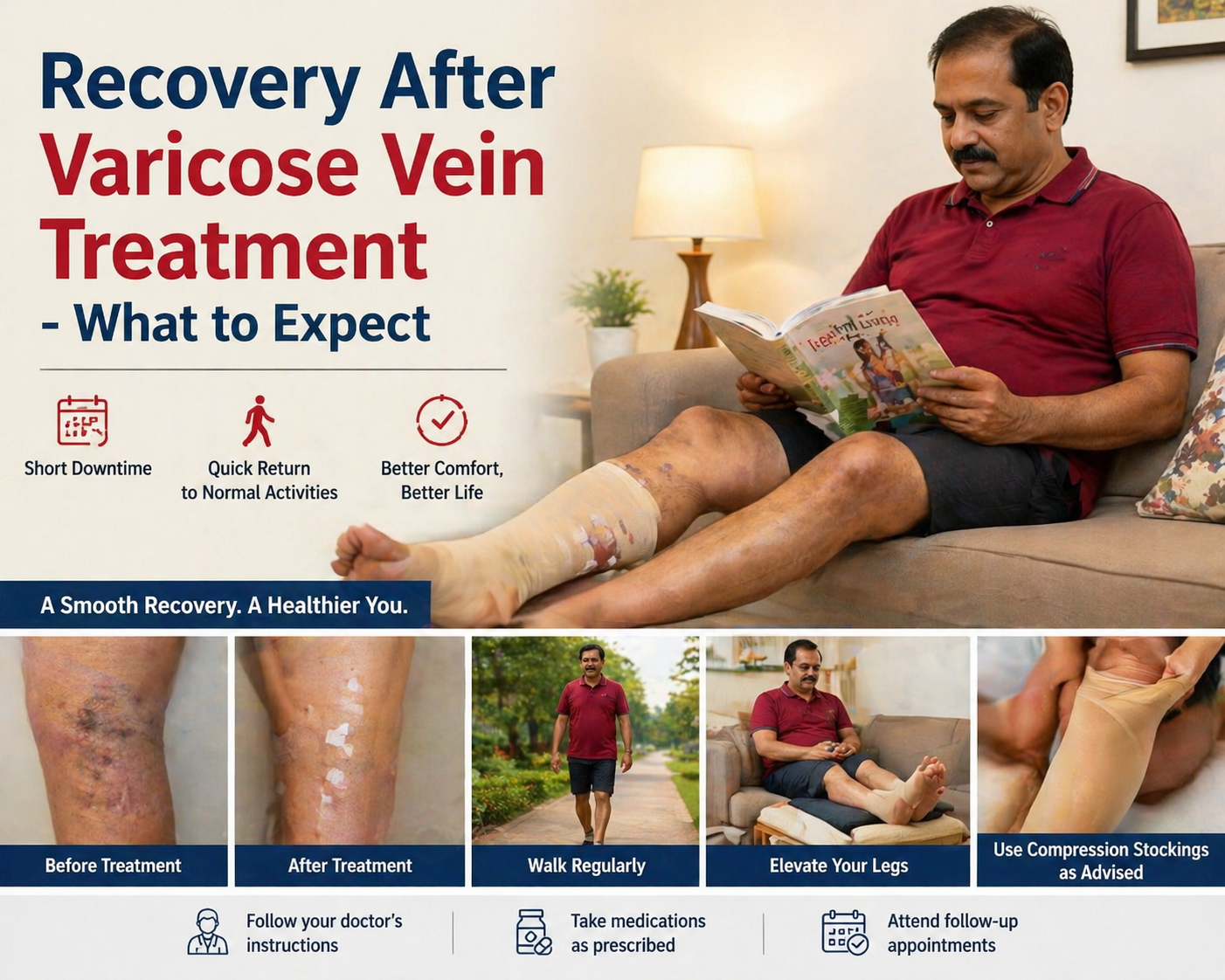
If you’ve been considering Varicose Vein Treatment, one of your biggest questions is probably: “How long will recovery take, and what will I actually feel afterwards?” The good news is that today’s procedures look nothing like the long, painful vein-stripping surgeries of the past. Most modern techniques are minimally invasive, performed in a clinic setting, and allow you to walk out the same day.
This guide walks you through everything you need to know about Recovery After Varicose Vein Treatment – What to Expect — from the first 24 hours to long-term aftercare — so you can plan ahead with confidence.
How Modern Varicose Vein Treatment Has Changed Recovery
Years ago, varicose vein surgery meant general anaesthesia, hospital admission, and weeks of downtime. Today, advanced techniques like Endovenous Laser Ablation (EVLA), Radiofrequency Ablation (RFA), VenaSeal (medical superglue), ClariVein, sclerotherapy, and ambulatory phlebectomy have transformed the experience completely.
These procedures share three big advantages:
- Performed under local anaesthesia
- Same-day discharge in most cases
- Faster return to work, family, and exercise
When patients ask us about Recovery After Varicose Vein Treatment – What to Expect, the simplest answer is this — far less than you’d think.
Recovery Timeline: How Soon Can You Get Back to Normal?
Recovery time depends on the procedure, but for most minimally invasive options, the timeline looks something like this:
- Same day: Walking, light household activity, desk work
- Day 2–3: Most daily activities, gentle stretching
- Day 4–7: Light exercise like brisk walking or stationary cycling
- Week 2–4: Most patients return to gym workouts, sports, and travel
- Phlebectomy patients: Recovery may extend slightly longer due to small incisions
Patients who choose Varicose Vein Treatment in Hyderabad at LaserQure are typically up and walking within minutes of the procedure ending.
The First 24 Hours After Treatment
The first day sets the tone for healthy healing. Here’s what’s recommended:
- Walk gently every couple of hours to promote circulation
- Avoid showering for the first 24 hours
- Skip baths, swimming pools, and saunas for at least 3 days
- Stay hydrated — water supports healthy blood flow and reduces clot risk
- Avoid alcohol and heavy meals on day one
You may feel mild tightness, warmth, or pulling in the treated leg. These sensations are normal and usually settle within a few days.
The First Week: What You’ll Likely Notice
The first week of Recovery After Varicose Vein Treatment: What to Expect is generally smooth. Most patients describe it as “manageable, not painful.” You may notice:
- Mild bruising along the path of the treated vein
- A tender, cord-like feeling under the skin
- Slight redness or warmth at injection sites
- Gradual fading of bulging veins
Bruising is most common after ambulatory phlebectomy and can take 3–4 weeks to resolve completely. None of this should stop you from working or moving — in fact, gentle activity speeds recovery.
Compression Stockings: Are They Really Necessary?
Compression stockings are one of the most-asked-about parts of Varicose Vein Treatment recovery. They help reduce swelling, support the treated vein, and improve comfort. Whether you’ll need them depends on the procedure:
- Sclerotherapy, ClariVein, VenaSeal: Usually not required
- EVLA & RFA: Worn for around 3–5 days
- Ambulatory phlebectomy: Worn for up to 2 weeks
Your vein specialist at LaserQure will give you personalised guidance. If you’re pain-free and the leg looks healthy, compression isn’t always strictly mandatory — but wearing them as advised gives the best long-term result.
What You’ll Need to Do at Home
Following simple aftercare instructions makes a huge difference. For nearly all forms of Varicose Vein Treatment, patients are advised to:
- Walk for 30 minutes daily to improve circulation
- Elevate legs for 10 minutes several times a day during the first 2 weeks
- Avoid strenuous exercise for at least 3 days post-procedure
- Avoid long-distance flights (over 6 hours) for around 3 weeks
- Wear loose, comfortable clothing that doesn’t restrict the legs
- Take prescribed medications exactly as directed
These small steps go a long way toward preventing complications and ensuring your treated veins heal properly.
Common Sensations During Recovery
Every patient heals slightly differently. The most common temporary side effects include:
- Bruising: Especially after phlebectomy
- Soreness or tenderness: Mild and improves daily
- Tightness: A pulling sensation along the treated vein
- Mild swelling or redness: Settles within a week or two
- Numb patches: Rare and usually temporary
If you experience sudden severe pain, fever, calf swelling, or shortness of breath, contact your specialist immediately — these can indicate rare complications like DVT and need prompt evaluation.
Are There Any Risks to Be Aware Of?
Modern Varicose Vein Treatment is considered very safe. Still, understanding the risks helps you make an informed choice:
- Thermal ablation (EVLA/RFA): Less than 1% risk of minor nerve irritation; very rare DVT risk
- Injectable treatments (sclerotherapy, ClariVein, VenaSeal): Less than 0.1% DVT risk; rare allergic reactions
- Ambulatory phlebectomy: Slightly higher risk of infection due to small incisions
At LaserQure, every patient is screened thoroughly during consultation, and the procedure is matched to your specific vein anatomy and medical history.
Long-Term Recovery and Preventing New Veins
Healing doesn’t stop when bruises fade. To maintain results long-term:
- Stay active — walking remains your best friend
- Maintain a healthy weight to reduce vein pressure
- Avoid prolonged standing or sitting without breaks
- Wear compression on long flights to prevent new varicose veins
- Stay hydrated and eat fibre-rich foods
Patients often report that the benefits go far beyond aesthetics — better sleep, less leg pain at night, improved mobility, and renewed confidence in shorts or skirts. Many also notice reduced heaviness and cramping after long days of standing or sitting at work.
Lifestyle plays a bigger role than most people realise. Regular calf-strengthening exercises, occasional leg elevation while watching TV, and standing breaks every hour during desk work all help your venous system stay healthy. Patients who follow these habits consistently are far less likely to develop new problem veins in the years ahead.
Why Choose LaserQure for Varicose Vein Treatment in Hyderabad
When it comes to Varicose Vein Treatment in Hyderabad, LaserQure stands out for its patient-first approach and advanced technology. Here’s what makes us different:
- Experienced vascular specialists with thousands of successful procedures
- Latest minimally invasive techniques including laser, RFA, and VenaSeal
- Walk-in, walk-out treatment — no hospital admission required
- Transparent pricing and personalised treatment plans
- Dedicated aftercare support so you’re never left guessing during recovery
We believe a smooth recovery starts with the right diagnosis, the right procedure, and the right team behind you.
Frequently Asked Questions (FAQs)
1. How long does Recovery After Varicose Vein Treatment usually take?
Most patients resume daily activities the same day, with full recovery typically within two to four weeks.
2. Will I feel pain after Varicose Vein Treatment?
Mild soreness and tightness are common but pain is usually minimal and easily managed without strong medication.
3. Can I walk immediately after Varicose Vein Treatment in Hyderabad?
Yes, walking is encouraged right after the procedure to support healthy circulation and reduce clot risk.
4. When can I exercise after my Varicose Vein Treatment?
Light walking is recommended immediately, while strenuous exercise should be avoided for at least three to five days.
5. How long should I wear compression stockings after treatment?
Compression stockings are typically worn for three to five days, or up to two weeks after phlebectomy.
6. Can I shower after Varicose Vein Treatment?
You should avoid showering for 24 hours, and avoid baths, swimming, or hot tubs for at least three days.
7. Is bruising normal during Recovery After Varicose Vein Treatment?
Yes, mild bruising is very common and usually fades naturally within three to four weeks post-procedure.
8. When can I travel after Varicose Vein Treatment?
Short trips are fine immediately, but long flights over six hours should be avoided for around three weeks.
9. Will varicose veins return after treatment?
Treated veins rarely return, though new veins can develop, which is why healthy lifestyle habits matter.
10. How soon can I see results after Varicose Vein Treatment in Hyderabad?
Visible improvements often appear within two to six weeks as bruising fades and treated veins gradually disappear.
Ready to Start Your Recovery Journey?
Understanding Recovery After Varicose Vein Treatment: What to Expect is the first step toward healthier, lighter, more comfortable legs. With today’s minimally invasive options, there’s no reason to live with painful or unsightly varicose veins any longer.
If you’re exploring Varicose Vein Treatment in Hyderabad, the team at LaserQure is here to guide you from consultation through complete recovery.
📞 Call us today to book a consultation 🌐 Visit: www.laserqure.com
Take the first step toward pain-free legs and renewed confidence — with LaserQure.