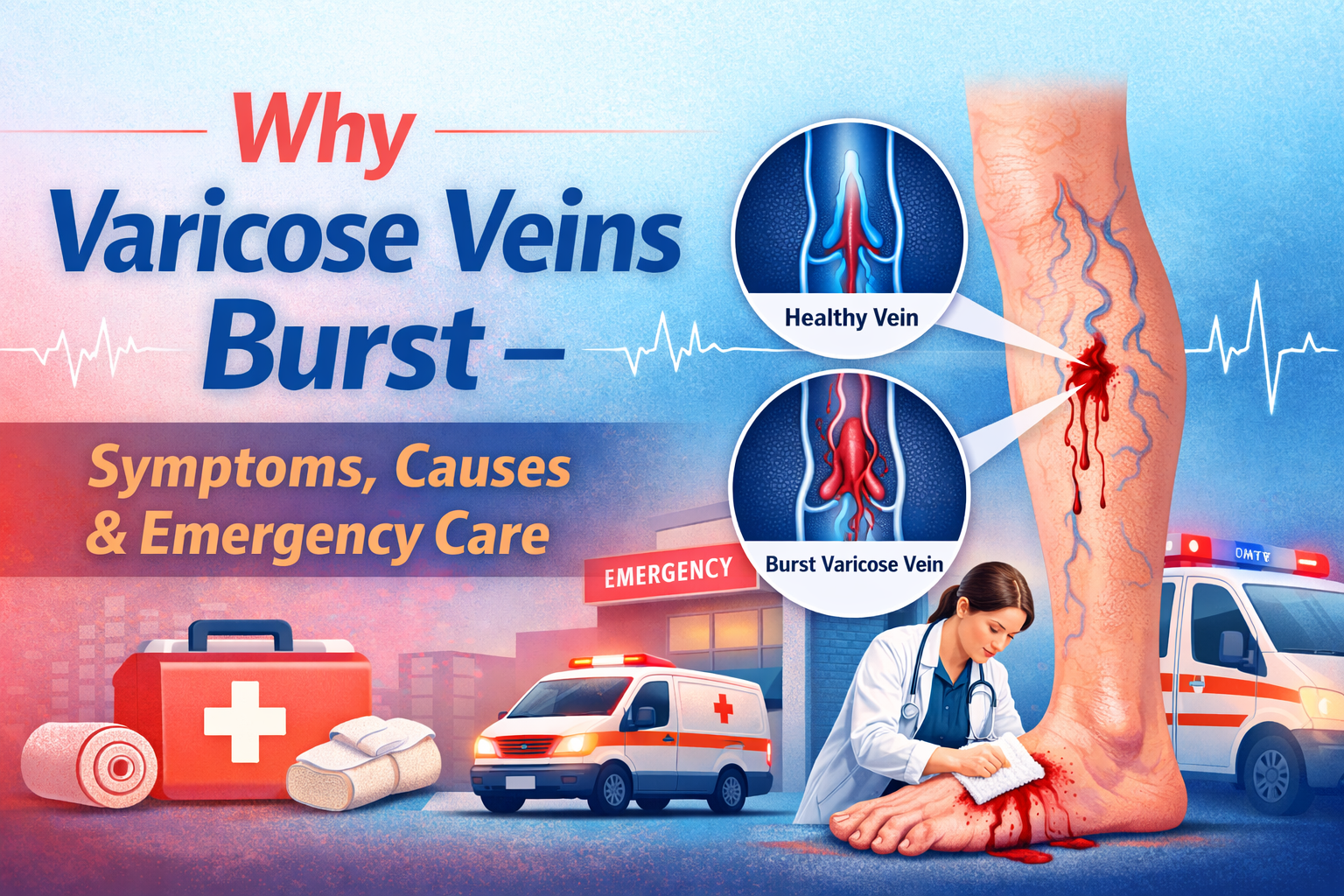
Varicose veins usually progress slowly over time. However, certain complications can occur unexpectedly. One of the most distressing situations is sudden bleeding from a damaged vein. Many individuals do not realize that enlarged leg veins can rupture, sometimes even without significant injury. Understanding why varicose veins burst, along with their symptoms, causes, and emergency care, is essential because timely action can prevent serious complications.
At LaserQure, we focus on early evaluation and management of venous conditions to reduce the likelihood of emergencies. This article explains how vein rupture occurs, the warning signs to watch for, and what steps should be taken if bleeding happens.
How Varicose Veins Weaken Over Time
Leg veins are responsible for carrying blood upward toward the heart. Small one-way valves inside the veins prevent blood from flowing backward. When these valves become weak or damaged, blood begins to pool in the lower legs due to gravity.
Gradually, this pooling leads to:
- Increased pressure inside the vein
- Stretching and widening of the vein walls
- Loss of natural elasticity
- Visible bulging beneath the skin
As this process continues, the vein walls become thinner and more fragile. In advanced cases, even minor stress can cause the weakened area to tear.
This gradual deterioration explains why rupture becomes possible in untreated venous disease.
What Happens When a Varicose Vein Bursts?
When people say a vein has “burst,” they are referring to a tear or split in a fragile section of the vein wall. It is not a dramatic explosion, but rather a rupture in an already weakened structure.
Two types of bleeding may occur:
External Bleeding
Blood exits through a break in the skin. Because venous blood flows continuously (though not forcefully like arterial blood), the bleeding may seem steady and persistent.
Internal Bleeding
Blood leaks into the surrounding tissues beneath the skin. This can cause swelling, bruising, and dark discoloration.
Both situations require medical evaluation to treat the underlying venous problem and prevent recurrence.
Why Varicose Veins Burst – Common Contributing Factors
Several conditions increase the likelihood of rupture in already fragile veins.
1. Chronic Venous Pressure
Long-standing venous reflux creates sustained pressure within the lower leg veins. Over time, this weakens the structural integrity of the vessel walls.
2. Thinning of the Overlying Skin
As veins enlarge, the skin above them stretches and may receive reduced blood supply. This can make the skin dry, delicate, and more prone to injury.
3. Minor Physical Trauma
Everyday activities such as shaving, scratching, or accidentally bumping the leg can trigger bleeding in an exposed, weakened vein.
4. Heat-Induced Vessel Expansion
Hot showers, baths, or warm weather can cause blood vessels to dilate. In severely compromised veins, this additional expansion may precipitate rupture.
5. Venous Ulcers
Advanced venous disease can lead to skin breakdown and ulcer formation. If an ulcer extends deep enough, it may expose the underlying vein and increase bleeding risk.
6. Age-Related Tissue Changes
As people age, connective tissues lose strength and elasticity. This natural decline makes older adults more vulnerable to vein rupture.
Warning Signs That Suggest Increased Risk
A rupture often does not occur without prior indications. The body typically shows signs of worsening venous insufficiency.
Skin Changes
- Brownish or reddish discoloration near the ankles
- Thickened or hardened skin
- Persistent itching
- Thin, shiny, or fragile skin surface
Vein-Related Symptoms
- More pronounced bulging veins
- Localized tenderness
- Warmth over a specific vein
- Swelling that worsens by evening
Subtle Indicators Before Rupture
- Small red surface spots
- Tight, stretched skin over a prominent vein
- Sudden enlargement of a varicose vein
Recognizing these early warning signals allows individuals to seek treatment before an emergency develops.
How Serious Is a Burst Varicose Vein?
Although venous bleeding occurs under lower pressure than arterial bleeding, it can still be significant. If a person remains standing, gravity continues directing blood toward the lower legs, which may prolong bleeding.
Potential complications include:
- Noticeable blood loss
- Repeated bleeding episodes
- Infection
- Slow wound healing
For elderly individuals, particularly those living alone, uncontrolled bleeding can become more concerning.
This is why understanding the causes, symptoms, and emergency response for ruptured varicose veins is critical for preventing avoidable risks.
Emergency Care: What To Do If a Varicose Vein Starts Bleeding
If a varicose vein begins to bleed, staying calm and acting quickly can help control the situation effectively.
Step 1: Sit or Lie Down Right Away
Do not remain standing. Standing allows gravity to increase blood flow toward the legs, which can worsen bleeding.
Step 2: Elevate the Affected Leg
Lift the leg so it is positioned above the level of your heart. Elevation reduces pressure inside the veins and helps slow blood flow.
Step 3: Apply Firm, Direct Pressure
Use a clean cloth, gauze, or sterile dressing and press firmly over the bleeding site. Consistent pressure is essential to control blood loss.
Step 4: Avoid Frequently Lifting the Cloth
Do not repeatedly check the wound. Maintaining steady pressure gives the body time to form a clot and stop the bleeding.
Step 5: Get Medical Assessment
Even if the bleeding stops, consult a doctor. The damaged vein needs proper evaluation to prevent future episodes.
These immediate actions play a vital role in safely managing complications related to ruptured varicose veins.
Who Is at Greater Risk of Vein Rupture?
Certain individuals have a higher likelihood of experiencing this complication, including:
- People with long-standing untreated varicose veins
- Individuals showing skin darkening near the ankles
- Those who are overweight or obese
- Individuals with limited physical activity or prolonged immobility
- Older adults
- Patients diagnosed with chronic venous insufficiency
Addressing varicose veins early significantly lowers the chance of rupture.
Medical Care After a Vein Rupture
Treatment focuses on stopping the immediate problem and correcting the underlying venous condition.
Initial Care
- Application of compression bandaging
- Proper wound cleaning and protection
- Monitoring for continued or recurrent bleeding
Diagnostic Assessment
A vascular ultrasound is commonly performed to evaluate:
- Valve dysfunction
- Degree of backward blood flow (reflux)
- Location and severity of affected veins
Long-Term Treatment Options
Modern, minimally invasive procedures may include:
- Endovenous laser therapy
- Radiofrequency ablation
- Ultrasound-guided foam sclerotherapy
- Medical adhesive (vein glue) closure
These treatments seal off damaged veins internally, allowing blood to reroute through healthy veins and improving circulation.
At LaserQure, advanced laser-based vein treatments are performed with a focus on safety, precision, and faster recovery.
Can a Varicose Vein Rupture Be Prevented?
In many cases, yes—especially when venous disease is managed early.
Preventive strategies include:
- Avoiding prolonged standing or sitting
- Maintaining a healthy body weight
- Using compression stockings when recommended
- Elevating the legs during rest
- Seeking medical evaluation if symptoms worsen
Early diagnosis and treatment remain the most effective way to prevent emergency complications.
When Should You Seek Urgent Medical Care?
Immediate medical attention is necessary if you experience:
- Active or heavy bleeding from the leg
- Sudden swelling with dark discoloration
- Severe pain along a vein
- Repeated minor bleeding episodes
- Signs of infection such as redness, warmth, or fever
Prompt care reduces the risk of further complications.
Why Early Treatment Is Important
Varicose veins are a progressive condition. They do not disappear without treatment. What may begin as mild bulging veins can eventually lead to skin changes, ulcers, or rupture if left unmanaged.
Timely treatment can:
- Relieve discomfort
- Improve blood flow
- Prevent skin breakdown
- Lower the risk of bleeding
Understanding the causes, warning signs, and emergency response associated with varicose vein rupture encourages proactive healthcare decisions rather than crisis management.
Frequently Asked Questions
1. Can a varicose vein rupture without direct injury?
Yes. In advanced stages, increased internal pressure and weakened vein walls can lead to spontaneous rupture.
2. Is bleeding from a varicose vein dangerous?
It can become serious if not controlled promptly with elevation and firm pressure.
3. Does a rupture mean surgery is required?
Not necessarily. Many minimally invasive procedures are available today.
4. Can bleeding occur internally?
Yes. Blood may collect under the skin, causing swelling and bruising.
5. Are older adults more vulnerable?
Yes. Aging weakens connective tissue and skin, increasing susceptibility.
6. Do compression stockings help prevent rupture?
They reduce venous pressure and may slow disease progression.
7. Should I see a doctor even if bleeding stops?
Yes. The underlying venous issue should always be evaluated.
8. Are laser treatments safe?
Modern laser vein treatments are widely used and minimally invasive.
9. Will all varicose veins eventually burst?
No. However, untreated advanced cases carry higher risk.
10. Can bleeding happen again?
Yes, if the affected vein is not properly treated.
Conclusion
Varicose veins are not merely a cosmetic concern. As venous pressure increases and skin integrity weakens, the risk of rupture rises. Recognizing early warning signs, knowing how to respond during an emergency, and seeking timely medical care can significantly reduce complications.
Early consultation and modern vein treatment options help protect long-term vascular health. If symptoms are progressing, scheduling an evaluation at LaserQure can help prevent avoidable emergencies and ensure safer outcomes.