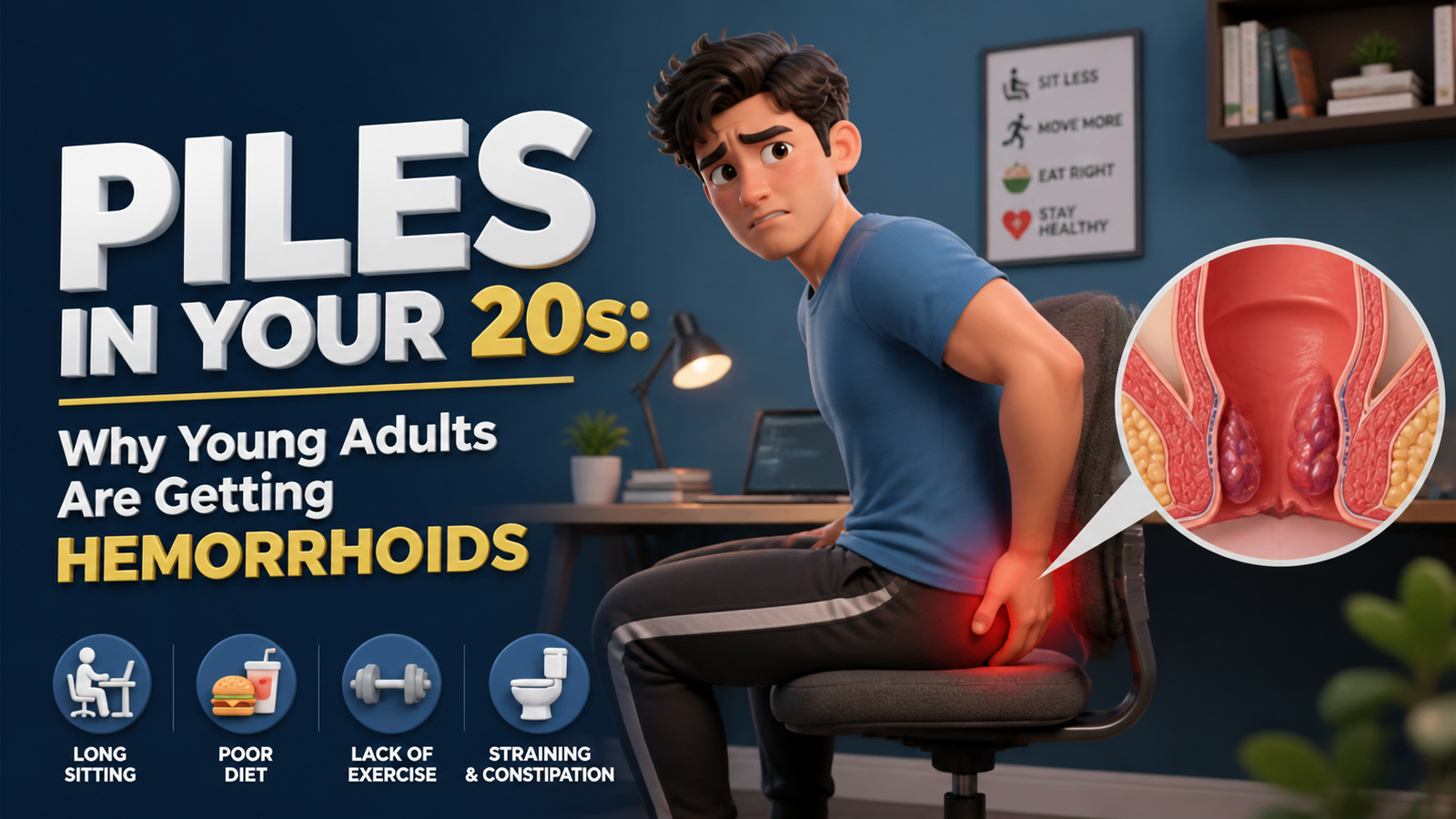
If you are in your twenties and noticed something unusual — discomfort during bowel movements, a small streak of blood on toilet paper, or a strange lump near the anal area — you may have brushed it off. After all, isn’t piles supposed to be a problem people deal with much later in life?
The honest answer may surprise you: piles/Hemorrhoids in 20s is far more common than most people realise, and clinics across India are seeing a steady rise in young adult patients. At LaserQure, we regularly treat working professionals, students, and new parents in their twenties who never expected to face this condition so early.
Let’s break down why this is happening, what symptoms to watch for, and what modern treatment options look like for young adults today.
Yes — and the numbers back it up. While hemorrhoids were traditionally associated with people aged 45 and above, lifestyle changes over the past decade have shifted this entirely. Studies and clinical observations now show that a significant portion of patients seeking treatment for piles in 20s fall between the ages of 20 and 35.
The reasons are not mysterious. They are tied directly to how young adults live, work, and eat today. The good news is that early intervention almost always leads to a smoother recovery, and many cases can be managed without surgery if caught in time.
Understanding the cause is the first step to prevention. Here are the most common reasons piles/Hemorrhoids in 20s has become so widespread:
1. Sedentary Work and Study Culture
Long hours at a desk, often eight to twelve a day, put continuous pressure on the rectal veins. Whether you are a software engineer, a student preparing for competitive exams, or a content creator editing for hours, sitting for extended periods reduces blood circulation in the lower body and increases the risk of developing Piles/hemorrhoids.
2. Low-Fibre Diets and Processed Food
The shift from home-cooked meals to ordered-in fast food, instant noodles, and packaged snacks has dramatically reduced fibre intake among young adults. Low fibre means harder stools, which means straining during bowel movements — one of the leading causes of piles/Hemorrhoids.
3. Inadequate Water Intake
Many people in their twenties replace water with coffee, tea, energy drinks, or sodas. Chronic mild dehydration makes stools dry and difficult to pass, again leading to straining.
4. Phone Time on the Toilet
This is a quiet but significant cause. Spending fifteen to thirty minutes on the toilet scrolling through social media or watching videos puts prolonged pressure on the anal cushions. Even without straining, the act of sitting on a toilet seat for too long can trigger or worsen piles in 20s.
5. Heavy Lifting at the Gym
Fitness culture has exploded among young adults, which is excellent for overall health — but improper lifting technique, especially during deadlifts and squats, increases intra-abdominal pressure. Without proper breathing and form, gym-goers can unknowingly strain the same veins involved in hemorrhoid formation.
6. Pregnancy and Postpartum Changes
For women in their twenties, pregnancy is a major contributor. The growing uterus presses against pelvic veins, and hormonal changes slow digestion. Constipation during pregnancy and the strain of childbirth often lead to piles/Hemorrhoids that can persist if untreated.
7. Family History
Genetics plays a role too. If your parents or grandparents have had piles/Hemorrhoids, your connective tissue around the anal cushions may be predisposed to weakness, making you more likely to develop Piles/hemorrhoids earlier in life.
8. Chronic Stress and Irregular Sleep
Stress disrupts gut motility. Combined with irregular sleep patterns common in college and early career years, this leads to constipation or alternating bowel habits — both of which contribute to piles/Hemorrhoids.
Early-stage piles can be subtle, which is why young adults often ignore them. Pay attention to these warning signs:
- Bright red blood on toilet paper or in the toilet bowl after a bowel movement
- Itching or irritation around the anus
- A feeling of fullness or incomplete emptying after using the toilet
- Mild discomfort or aching, especially after sitting for long periods
- A small soft lump near the anal opening that may appear after straining
- Mucus discharge or staining of underwear
If you notice any of these symptoms persisting beyond a few days, it is worth getting a proper consultation rather than self-diagnosing online.
When Should You See a Doctor?
Many young adults delay seeing a specialist because of embarrassment or the belief that piles/Hemorrhoids will resolve on their own. While early-stage hemorrhoids sometimes do improve with diet and lifestyle changes, certain signs need medical attention right away:
- Bleeding that lasts more than a week
- Severe pain that interferes with sitting, walking, or working
- A hard lump that does not go back inside
- Bleeding accompanied by weight loss, fatigue, or changes in stool colour
- Recurring symptoms despite home remedies
These could indicate progression to a more advanced grade of piles or another condition like an anal fissure, fistula, or something more serious that requires evaluation.
Treatment Options for Piles/Hemorrhoids in Your 20s
The earlier you address piles/Hemorrhoids, the simpler the treatment. Options range from conservative care to advanced procedures.
Lifestyle and Dietary Changes
For Grade 1 and early Grade 2 piles, doctors often recommend:
- Increasing fibre intake to 25–30 grams per day through fruits, vegetables, oats, and whole grains
- Drinking 2.5 to 3 litres of water daily
- Avoiding straining and limiting toilet time to under five minutes
- Sitz baths with warm water to soothe inflammation
- Topical creams or ointments prescribed by a doctor
Medical and Minor Procedures
If lifestyle changes are not enough, options like rubber band ligation, sclerotherapy, or infrared coagulation may be suggested for slightly more advanced cases.
For Grade 2, 3, and 4 piles, laser surgery is one of the most patient-friendly options available today, especially for working professionals in their twenties who cannot afford long recovery times. The procedure is precise, involves minimal cutting, and most patients return to routine activities within a couple of days.
If you are juggling a demanding job, college, or family responsibilities, laser treatment for piles/Hemorrhoids offers practical advantages:
- Same-day discharge — no extended hospital stay
- Minimal post-operative pain compared to traditional open surgery
- Quicker return to work — often within 2 to 3 days
- Reduced risk of recurrence when combined with lifestyle changes
- Shorter procedure time — typically completed within 30 to 45 minutes
- No large incisions or stitches, which means less wound care at home
These benefits matter especially for someone in their twenties who values mobility, independence, and getting back to a normal routine quickly.
Prevention Tips for Young Adults
Whether or not you have experienced symptoms, building these habits now can significantly reduce your risk of developing piles in 20s:
- Eat a fibre-rich meal at every sitting — include dal, vegetables, fruits, and whole grains
- Drink water consistently throughout the day, not just during meals
- Keep your phone out of the bathroom
- Take a five-minute walk every hour if your work involves prolonged sitting
- Maintain proper form during weight training and engage your core
- Do not ignore the urge to pass stool — delaying it leads to harder stools later
- Manage stress through regular exercise, sleep, and breaks from screens
- Get a routine checkup if anyone in your immediate family has had piles or related conditions
LaserQure, located in Kukatpally, Hyderabad and operated at Anupama Hospitals, is dedicated to laser-based treatment of conditions like piles, anal fissure, anal fistula, pilonidal sinus, and varicose veins. Patients in their twenties especially appreciate:
- Free 15-minute consultations with experienced surgeons before committing to any treatment
- Cashless insurance support across 35+ insurers
- 0% EMI financing options to make treatment accessible without financial stress
- Same-day discharge so you can recover in the comfort of home
- Discreet, judgment-free environment — we understand the hesitation many young adults feel
You do not need to live with discomfort or worry. A short consultation can give you clarity on whether what you are experiencing is something simple to manage at home or something that needs professional treatment.
Frequently Asked Questions
Is it normal to get piles/Hemorrhoids in your 20s?
While not “normal” in the sense of being expected, piles/Hemorrhoids in 20s has become increasingly common due to sedentary lifestyles, low-fibre diets, and prolonged toilet time. It is not unusual, and it is treatable.
Can piles/Hemorrhoids go away on their own in young adults?
Mild Grade 1 piles/Hemorrhoids can sometimes resolve with dietary and lifestyle changes alone. However, more advanced cases usually need medical intervention to prevent worsening.
Is laser surgery safe for someone in their 20s?
Yes. Laser treatment for piles/Hemorrhoids is suitable for adults across age groups and is often preferred by younger patients due to the quick recovery and minimal disruption to daily life.
How long is the recovery after laser piles/Hemorrhoids treatment?
Most patients in their twenties return to desk work within 2 to 3 days and resume regular physical activities within 7 to 10 days, depending on the grade of piles/Hemorrhoids treated.
Will my insurance cover piles/Hemorrhoids treatment?
LaserQure works with 35+ insurance providers on a cashless basis. During your free consultation, our team can verify your specific policy coverage.
Does eating spicy food cause piles/Hemorrhoids?
Spicy food does not directly cause piles, but it can irritate existing hemorrhoids/Piles and worsen symptoms temporarily. The bigger dietary culprits are low fibre and inadequate hydration.
Can I exercise if I have piles/Hemorrhoids?
Light to moderate exercise like walking and yoga can actually help. However, heavy weightlifting and high-impact workouts should be paused until your condition is evaluated and managed.
Take the First Step Toward Comfort
Piles/Hemorrhoids in 20s is a quiet epidemic shaped by how we live today — but it is also one of the most treatable conditions when addressed early. Ignoring symptoms only allows them to progress to stages that need more involved treatment.
If you have been putting off that conversation with a doctor, consider this your sign. Book a free 15-minute consultation with LaserQure today — no pressure, no obligation, just a clear understanding of what you are dealing with and what your options are.
📍 LaserQure | Anupama Hospitals, Kukatpally, Hyderabad
📞 Call to book your free consultation
💬 Cashless insurance accepted
0% EMI available | Same-day discharge
Your twenties should be about building your career, your relationships, and your future — not silently struggling with a treatable condition. Reach out today.